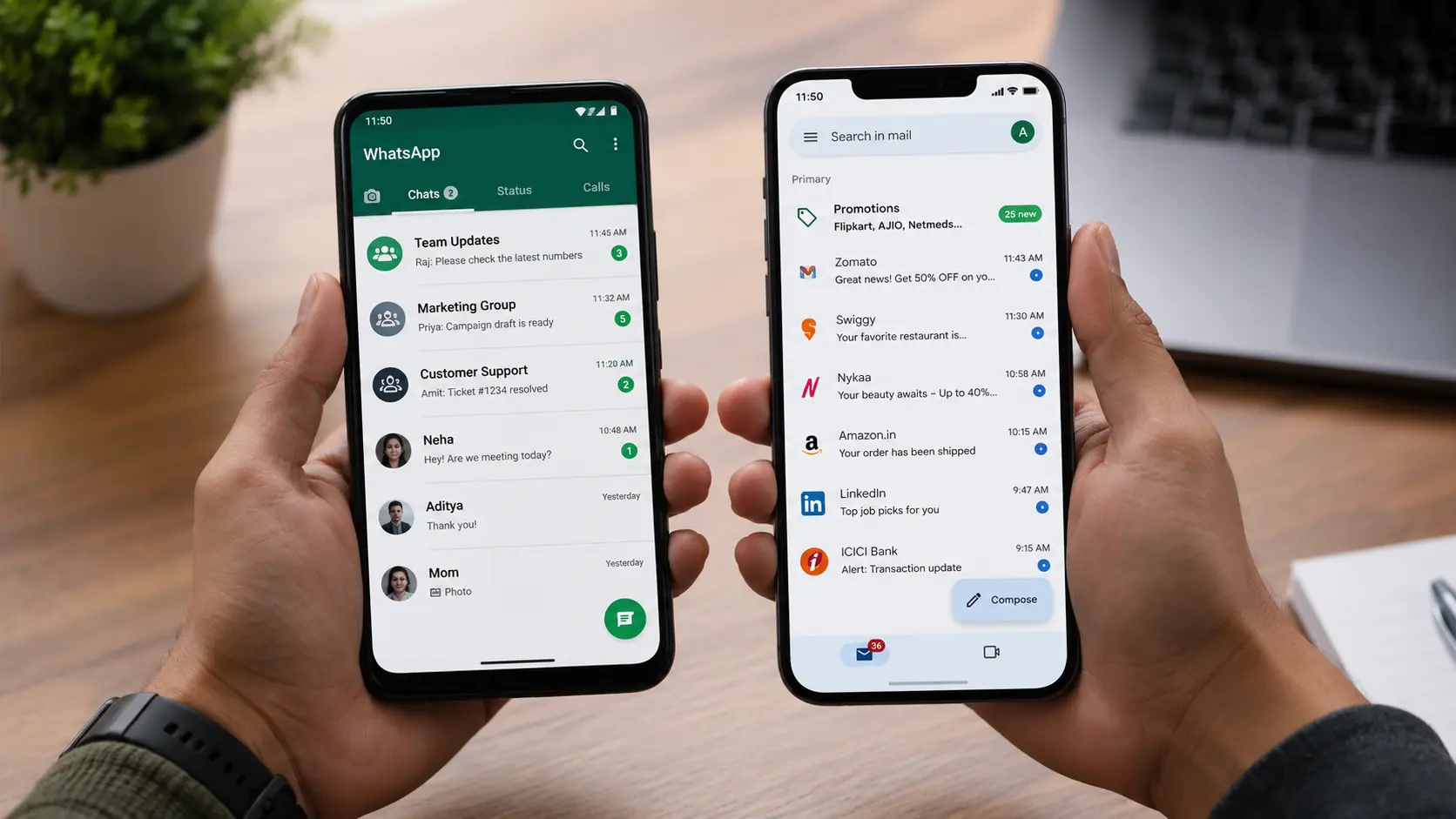
Run a social media campaign. Get traffic. Watch it disappear. This is the experience of nearly every business that runs Facebook, Instagram, or Google Ads without a dedicated landing page strategy. The clicks arrive, browse for a few seconds, find nothing specific enough to act on, and leave.
A landing page is the bridge between an ad's promise and a conversion. Without it, you are paying to deliver interested people to a location that doesn't know how to close them. This is one of the most common and most expensive mistakes in digital marketing — and it affects businesses across every industry, from sports leagues and educational institutions to healthcare providers and real estate developers.
Why Homepages Don't Work for Ad Traffic
Most businesses that don't use dedicated landing pages send ad traffic to their homepage. This seems logical — it's your main web presence, it has information about everything you offer — but it fails for a simple reason: homepages are designed for multiple audiences with multiple intentions, and paid advertising traffic is a specific audience with a specific intention.
A person who clicked on your Instagram ad about a specific service you offer is not in the same mental state as someone who typed your company name into Google and landed on your homepage. The Instagram prospect was responding to one specific message. Your homepage presents ten different messages, a navigation menu, multiple services, company news, and testimonials that may or may not be relevant to them. The cognitive overload of a homepage is the primary reason conversion rates from homepage-directed ad traffic are so low — typically 0.5-2%.
A well-built landing page for the same ad typically converts at 3-8%. For a business spending ₹50,000 per month on ads, the difference between 1% and 5% conversion is the difference between 10 leads and 50 leads. Everything else being equal.
What a Landing Page Actually Is
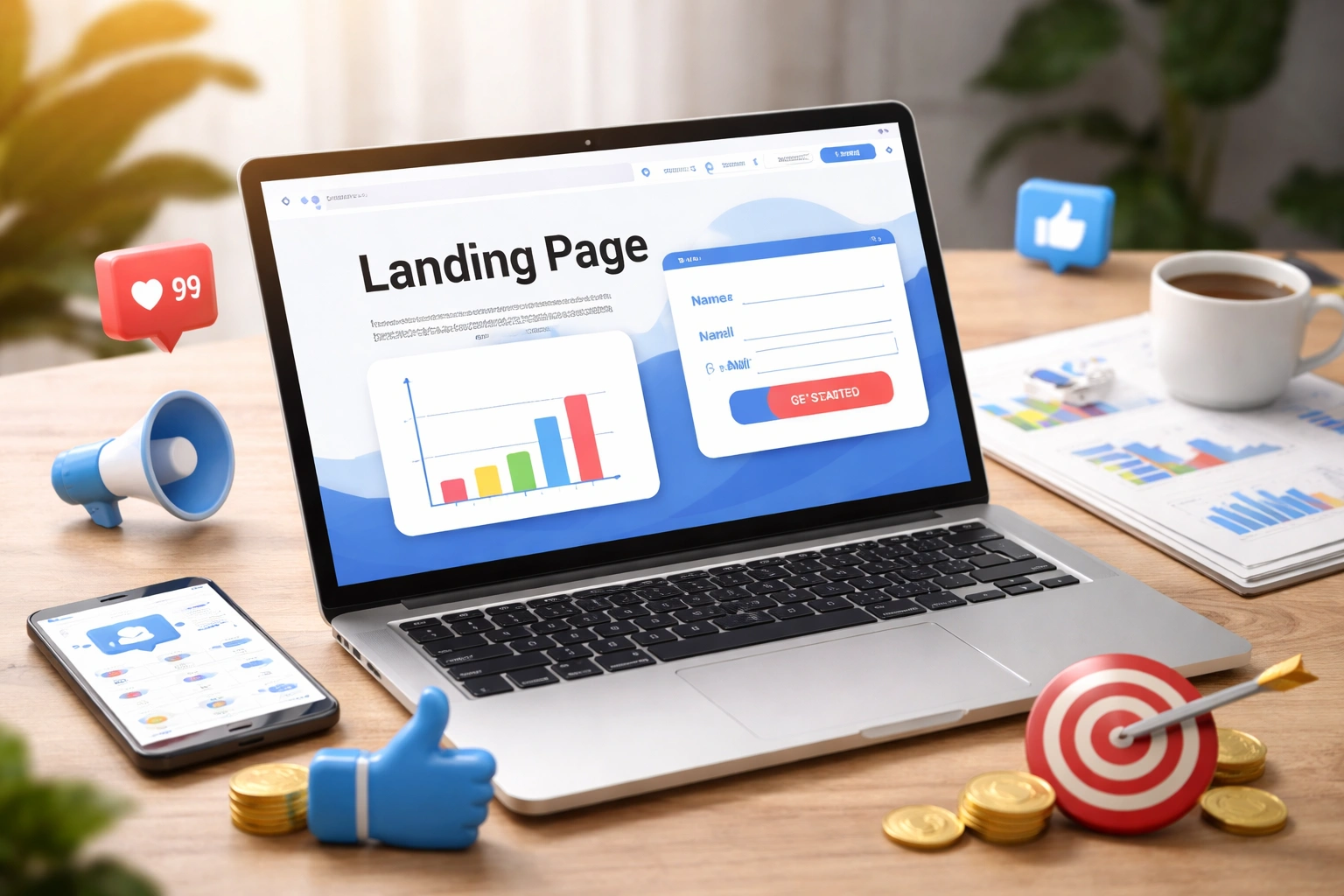
A landing page is a standalone web page with a single purpose: to convert visitors who arrive through a specific campaign into leads or customers. It typically has no navigation menu, no links to other pages, no distractions from the central conversion action.
What a landing page is not:
Your homepage
Your services page
Your 'About Us' page
A product category page on your e-commerce site
A social media profile
Every campaign should have a corresponding landing page that matches the ad's message, audience, and offer. A campaign for a specific service in a specific city should land on a page specifically about that service in that city. A campaign targeting a specific audience segment should land on a page written for that audience segment's specific concerns and language.
The Anatomy of a High-Converting Landing Page
High-converting landing pages across industries share a consistent set of structural elements:
Headline that matches the ad: If your ad says 'Hospital Patient Acquisition Campaigns', your landing page headline should immediately reference hospital patient acquisition. Any mismatch between ad and landing page creates a 'wrong door' feeling that sends visitors away.
A clear value proposition above the fold: Tell the visitor in one sentence what they get by taking action here. Specific, benefit-oriented, and immediately understandable.
Social proof: Client logos, testimonials, case study results, or a counter of clients/projects served. Social proof reduces the risk perception of taking action — it tells the visitor that others have done this before and benefited from it.
A simple lead form: The form should ask for only what you actually need. Name, phone number, and possibly one qualification question. Every additional field reduces conversion rate. WhatsApp number as the primary form field often outperforms email in the Indian market.
A single, prominent call to action: One button. One color. One action. 'Schedule Consultation', 'Get Callback', 'Download Brochure'. Not multiple options pulling attention in different directions.
Mobile optimization: In India, 70-80% of ad clicks happen on mobile devices. A landing page that isn't fully mobile-optimized — fast load time, large tap targets, readable text, simple layout — will lose the majority of its traffic before anyone reads your headline.
Landing Pages by Industry
While the structural principles are consistent, the content and tone of landing pages should vary significantly by industry:
Sports organizations: Landing pages for ticket sales, sponsorship inquiry, or league registration should be visually energetic with action photography, event-specific urgency, and clear dates. Match-day ticket pages need countdown elements and last-minute urgency.
Healthcare providers: Landing pages for patient acquisition need trust signals prominently placed — doctor credentials, hospital accreditation, patient testimonials. The tone should be reassuring and professional. Lead forms should be simple and HIPAA-aware in spirit.
Educational institutions: Landing pages for admission campaigns should feature specific program outcomes — placement records, average packages, faculty names. Parent-targeted versions should emphasize safety, infrastructure, and long-term value. Student-targeted versions should emphasize experience and career trajectory.
Service businesses: Focus on the specific outcome the prospect gets — 'More patients in 90 days' or 'Fill your league's sponsorship pipeline' rather than service descriptions. Lead with results, not process.
Page Speed Is a Conversion Variable
A technically excellent landing page that loads slowly is an expensive failure. Google's research consistently shows that conversion rates drop by approximately 20% for every additional second of page load time. In India, where a significant portion of users are on 4G mobile connections with variable network quality, page load time is a particularly critical factor.
Target a load time of under three seconds on mobile. This requires: optimized images (compressed without quality loss), minimal JavaScript, a fast hosting environment, and possibly a CDN for users in different geographies.
Test your landing page load time monthly using Google PageSpeed Insights. Pay particular attention to the mobile score — it's almost always lower than desktop and more important for the Indian market.
Tracking and Testing
A landing page without tracking is a guessing exercise. Install Google Analytics 4 on every landing page and configure conversion events for every form submission or button click. This data tells you: how many people visited, what percentage converted, where they came from, and how long they spent on the page.
A/B testing — running two versions of a landing page element simultaneously to see which performs better — is how good landing pages become great landing pages. Test headline variations, form field count, CTA button copy and color, social proof placement, and hero image options. Every test improves your understanding of what your specific audience responds to.
The most effective digital marketing operations are not set-and-forget campaigns — they're iterative systems where every week's data informs the next week's decisions. Landing pages are the primary lever for conversion rate improvement in any such system.
Conclusion
Social media campaigns generate clicks. Landing pages convert them into business. Running campaigns without landing pages is the equivalent of spending money to bring customers to a door that doesn't open. The investment in well-built, tracked, and tested landing pages pays for itself in the first month through improved conversion rates and reduced cost per lead.
Eyelevel Growth Studio designs and optimizes landing pages for sports, healthcare, education, and business clients across India. If you're running campaigns and not getting the conversions you expect, landing page architecture is usually where the problem lies. Schedule a consultation at theeyelevelstudio.com.
Want Higher Conversions From Your Social Media Campaigns?
Driving traffic from social media is only the first step. A well-designed landing page turns interested visitors into real leads and customers. Explore more insights on landing page strategy, campaign funnels, and conversion-focused marketing systems.
Tags: