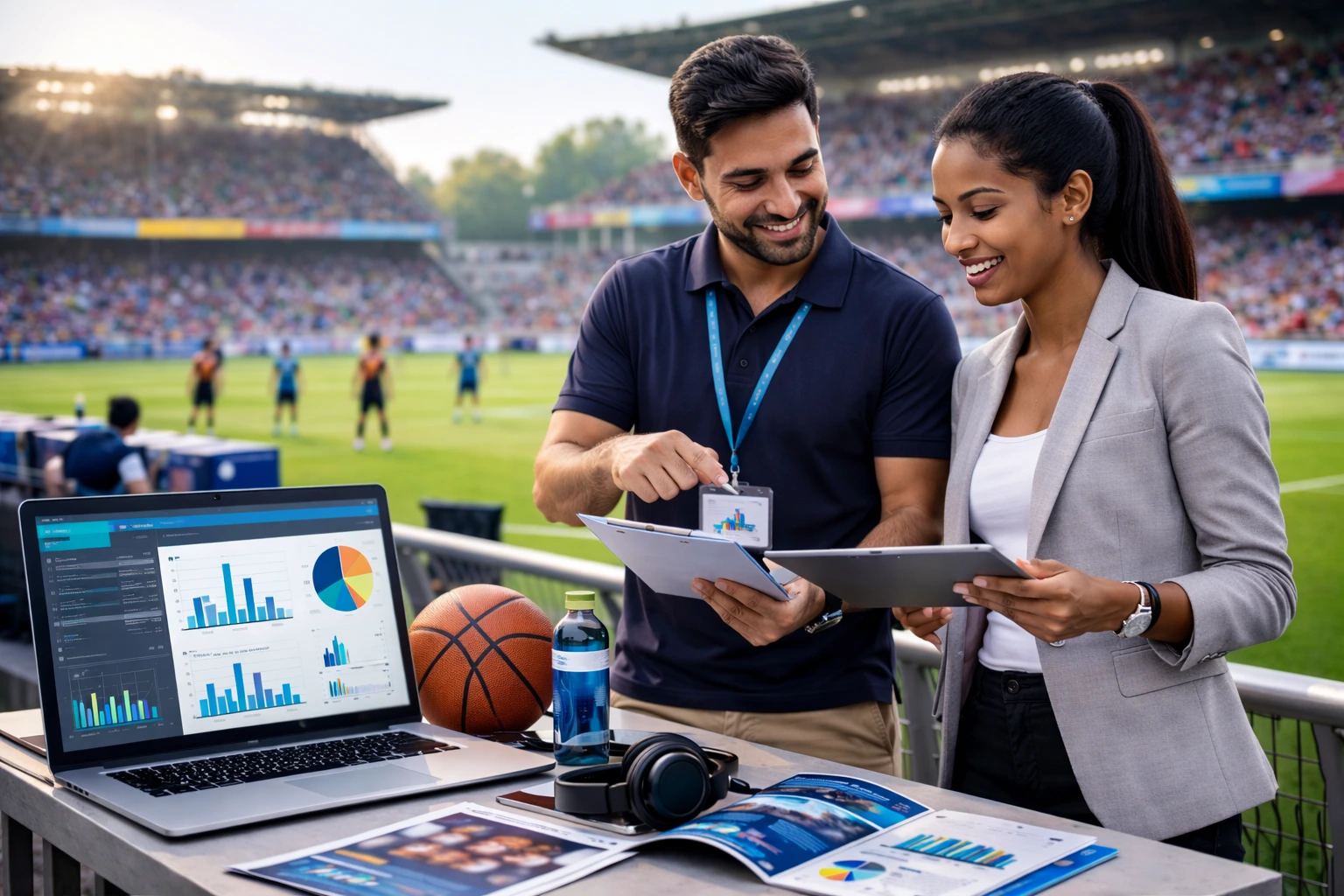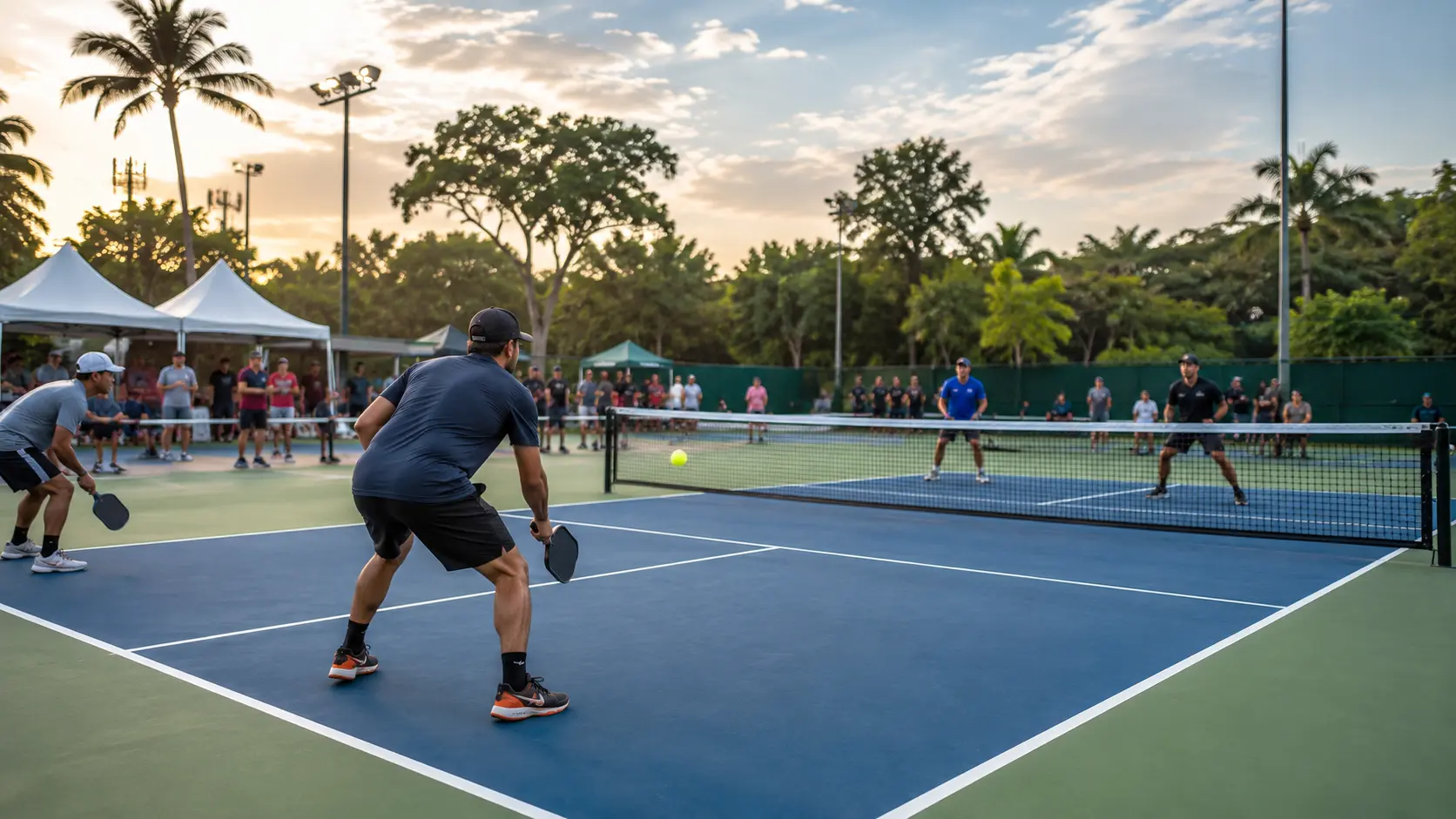
Most sports sponsorship decks share the same fatal flaw: they're designed to impress rather than to persuade. They're full of beautiful photographs, league logos, and impressive-sounding statistics — but they fail to answer the one question every sponsor is actually asking: why should I spend my money here instead of somewhere else?
The difference between a sponsorship deck that gets a meeting and one that gets a polite rejection isn't design. It's structure — specifically, whether the deck is built around the sponsor's commercial logic rather than the league's promotional agenda. Sponsors are not buying charity. They're buying marketing ROI. Your deck needs to speak that language from the first slide to the last.
The Most Common Failure Modes
Before getting to the framework, it's worth understanding the most common failure modes:
The brochure problem: Most decks read like event brochures — here's our league, here's last season's photos, here are some package tiers. They describe the property but don't construct a commercial case for investment.
Vague audience claims: 'We had great crowds' is not an audience proposition. Sponsors need demographics — age, gender, income bracket, geography, purchase behavior. Without this data, the sponsor is being asked to trust your intuition with their budget.
No ROI frame: If a sponsor spends ₹20 lakh on your league, what are they getting? Most decks list benefits (logo placement, social mentions, VIP hospitality) without framing them in terms of market value. What would equivalent media exposure cost on other channels?
Feature-heavy, benefit-light: Decks list what you're offering (PA announcements, banners, naming rights) but don't connect those features to business outcomes — brand awareness, lead generation, customer acquisition, employee morale.
The Market Thesis
The first section needs to answer the sponsor's first question: why is this worth my time? This is not the place for your league's history or a description of the sport. It's the place for your market thesis.
Tell the sponsor why your league exists in a moment of growing demand. What is the fan appetite for this sport in your region? What media trends support it? What gap in the sponsorship landscape does your property fill? Make the case that this is the right sport, right city, right moment — and that the brands who get in now get first-mover advantage.
Keep this section tight: two to three key data points and a compelling one-line positioning statement. 'South India's fastest-growing Pickleball league, targeting the 18-35 urban professional segment with zero incumbent title sponsors in this space.'
The Audience Profile
This is the section most decks either skip entirely or fill with estimates. Sponsors know the difference between documented data and guesses. If you have real data, lead with it. If you're building your first deck, be honest about what you know and what you're projecting — but make your projection methodology clear.
Audience profile should include: total attendance across last season's events, geographic breakdown, age and gender breakdown, social media audience demographics (pull these directly from Instagram Insights and YouTube Analytics), and any behavioral data you have (ticket purchase sources, registration form responses, survey results).
If you're running an emerging league without three seasons of data, build your audience case from proxy data: the existing fan base for this sport in your region, social media following, WhatsApp community size, partnership reach (if you've worked with schools, clubs, or associations). A well-constructed proxy case is far more credible than inflated estimates.
The Value Proposition
This is where most decks list features. Go one step further and frame every feature as a value proposition with a commercial comparison.
Don't just say: 'Title sponsor logo on all event banners.' Say: 'Title sponsor logo on all event banners — equivalent to 12,000 impressions per event day at a cost-per-impression of ₹0.08 versus ₹2.50+ for equivalent outdoor advertising in Chennai.'
Don't just say: 'Social media mentions across three platforms.' Say: 'Social media mentions across Instagram (12K followers), YouTube (8K subscribers), and Facebook (6K followers) — combined organic reach of approximately 40,000 per activation, excluding paid boost potential.'
The goal is to make the sponsor's decision a math problem rather than a faith exercise. When they can calculate rough ROI from your numbers, they can justify the spend internally to their CFO.
The Package Structure
Tiered sponsorship packages serve two purposes: they let sponsors self-select to a budget that fits them, and they create an anchoring effect that makes the middle tier feel like the obvious choice.
Three tiers is the proven structure. Name them meaningfully — not Bronze/Silver/Gold, which are generic and feel hierarchical — but something that reflects your league's identity. For a sports league: Franchise Partner, Season Partner, Event Partner.
Franchise Partner (highest tier): Title naming rights, exclusive category rights, premium activation space, dedicated athlete content, post-event report. Price at your stretch goal.
Season Partner (middle tier): Logo on primary collateral, social media activations, VIP hospitality, standard activation space. Price at your target close rate.
Event Partner (entry tier): Logo on event-specific collateral, one social mention per event. Price low enough to remove risk from the conversation.
Build the packages so that Season Partner feels like genuinely the best value — it usually is, and most sponsors will land there.
Proof of Delivery
If you have previous sponsors, this section is critical. Show what you delivered, in quantified terms. Not 'our sponsors were happy with the visibility' but 'title sponsor received 18,000 branded impressions across 4 events, 3,200 social media reach, and feature placement in 2 regional news articles.'
If you're building your first deck, use proof points from analogous properties — other leagues in similar sports in similar markets. Show that the market works, that fans show up, that brands get value. Borrow credibility from the category while you build your own.
If you have testimonials from previous partners, include them here — short, attributed, specific. 'Sponsoring [League] gave us direct access to the young professional audience in North Chennai that was impossible to reach through our usual media channels.' — Marketing Head, [Brand]
The Team
Sponsors are investing in a relationship, not just an event. They want to know who is running this operation and whether those people can be trusted to deliver what they're promising.
A brief team page — with photos, names, and one-line credentials for your key organizers and marketing leads — adds significant credibility. If you're working with a sports marketing agency like Eyelevel Growth Studio, name them. Sponsors draw comfort from knowing there's professional marketing infrastructure behind the league, not just passionate volunteers.
The Close
The final section should make the next step as frictionless as possible. Include: a clear call to action ('Schedule a 30-minute discovery call'), your contact person's name and direct details, a proposed decision timeline, and if possible, a limited availability signal ('We are accepting applications for Season Partner category until [date]').
The follow-up plan matters as much as the deck itself. Build a five-touch follow-up sequence: Day 1 — send deck with personal note, Day 3 — follow up with one additional data point, Day 7 — request a call, Day 14 — share a recent positive development (new athlete signing, media coverage), Day 21 — final check-in. Most sponsorship deals close after the third or fourth touchpoint, not the first.
Conclusion
A sponsorship deck is not a brochure. It's a business proposal. Build it like one — with a commercial thesis, documented audience data, quantified value propositions, and a clear ROI frame. Sponsors who say yes to well-constructed decks are making business decisions, not taking risks.
Eyelevel has built sponsorship decks for sports leagues across Tamil Nadu and helped close partnerships with regional and national brands. If you're building a deck or going into a sponsorship conversation and want a professional strategy review, contact us at theeyelevelstudio.com or call +91 97890 99499.
Want to Attract More Sponsors for Your League?
A strong sponsorship strategy goes beyond a well-designed deck. Learn more about building compelling sponsorship proposals, creating value for brands, and developing partnerships that drive long-term revenue for sports leagues and events.
Tags: