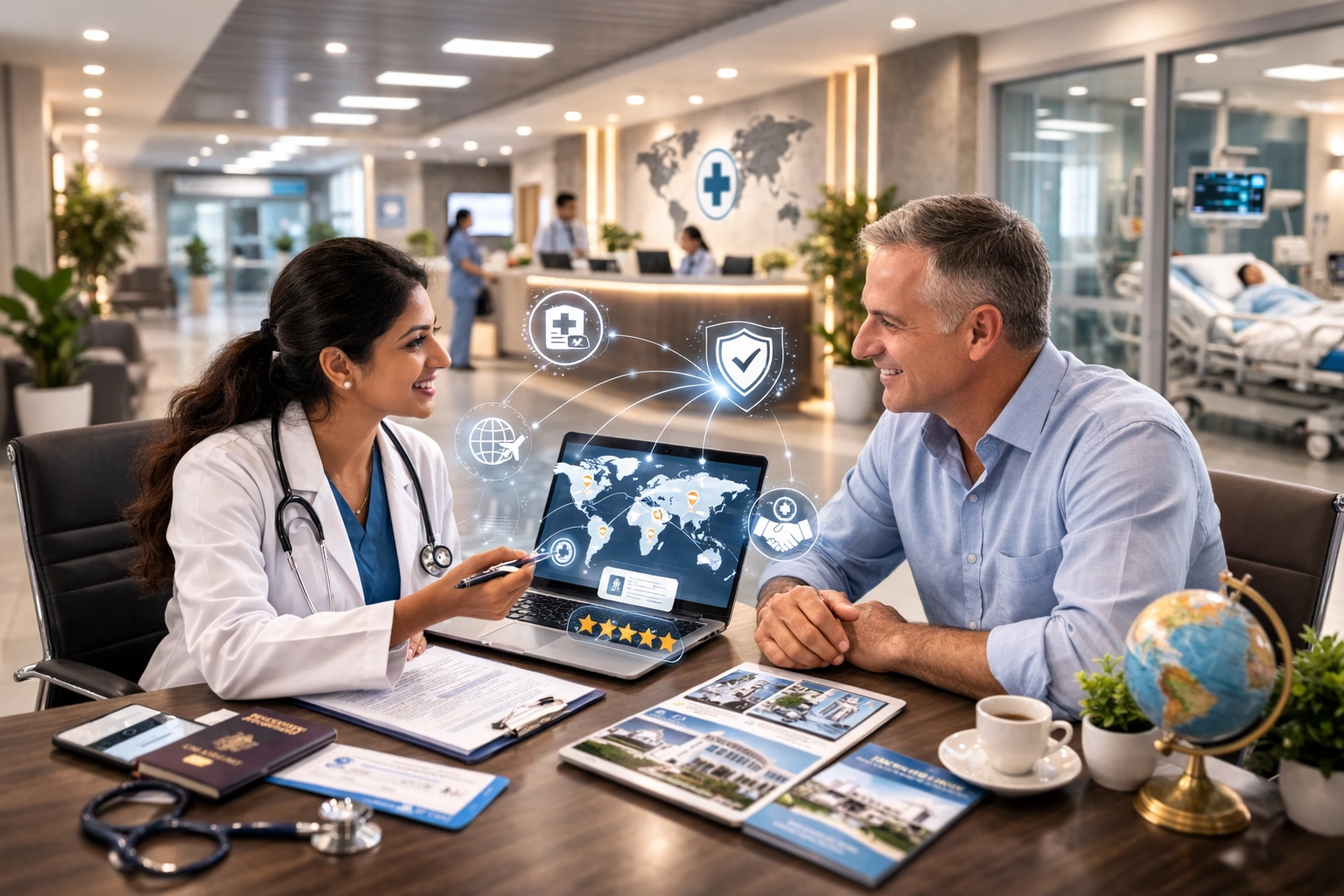
India is one of the world's fastest-growing medical tourism destinations. The country's combination of world-class surgical and diagnostic expertise, JCI-accredited hospitals, English-speaking medical staff, and dramatically lower treatment costs compared to Western countries — often 60-80% less than equivalent procedures in the UK, US, or Australia — makes it a compelling destination for patients across Africa, the Middle East, Southeast Asia, and the Indian diaspora worldwide.
India's medical tourism market was estimated at approximately ₹12,000 crore in 2024 and is projected to grow significantly through 2030. Yet the majority of this business flows through a small number of established hospitals and intermediary brokers. The majority of Indian hospitals — including many with genuinely excellent clinical outcomes — are capturing none of it, primarily because they haven't built the digital and marketing infrastructure required to reach and convert international patients.
How International Patients Make Decisions
An international patient's journey to an Indian hospital is fundamentally different from a domestic patient's journey, and marketing to them requires a completely different approach.
The trigger is typically a cost or access gap: a diagnosis that's prohibitively expensive in their home country, a procedure with very long waiting lists in their national health system, or a treatment that simply isn't available locally at acceptable quality standards. The decision to seek treatment abroad is significant — it involves international travel, language considerations, accommodation, and recovery planning — and it begins with intensive online research.
This research phase is thorough and multi-source. International patients look for: hospital accreditation (JCI is the gold standard they recognize internationally), specific physician credentials and published outcomes, verified patient testimonials from other international patients, transparent pricing for specific procedures, and assistance with logistics (visa, accommodation, airport transfer). Building a digital presence that addresses all of these information needs — before a patient ever contacts your hospital — is the foundation of effective medical tourism marketing.
Understanding Your Source Markets
Different international patient markets have different decision criteria and channel preferences:
Bangladesh, Nepal, Bhutan: High-volume markets for Indian hospitals, particularly for cardiac care, oncology, and orthopedics. These patients are price-sensitive and influenced heavily by word-of-mouth and broker networks. Multilingual content in Bengali and a WhatsApp-first communication approach are important for this market.
East Africa (Kenya, Nigeria, Ethiopia, Ghana): Growing high-value market for complex procedures. English-speaking. Highly influenced by online research and international patient testimonials. Facebook is the dominant social platform. Patients in this market typically do extensive pre-appointment research and want detailed written information about their specific procedure and associated costs.
Middle East (UAE, Oman, Bahrain, Kuwait): Indian expatriate community as well as local patients seeking treatment not available in GCC countries. Arabic-language content is an advantage for non-expatriate Gulf patients. Instagram is a significant research channel for younger patients in this market.
Southeast Asia (Malaysia, Indonesia, Myanmar): Increasingly important market as Indian hospitals build reputations in these countries. Digital-first research behavior. Strong influence of online reviews and hospital website quality on initial trust formation.
Building the Right Digital Infrastructure
Effective medical tourism marketing requires a different digital infrastructure than domestic patient acquisition:
International patient-specific landing pages: Create dedicated web pages for your International Patient Services — separate from your general hospital website. These pages should address the complete journey: why choose India, why choose your hospital, how to plan the trip, what the treatment will involve, and what support the hospital provides (visa assistance, accommodation, translation). These pages should be optimized for international search queries and potentially translated into Arabic, French, or Bahasa for key markets.
Procedure-specific pages in English: Build dedicated pages for your highest-demand procedures — cardiac bypass surgery, knee replacement, liver transplant, cancer treatment, IVF — with content specifically written for international patients. Include indicative pricing ranges (an unusual step for Indian hospitals, but expected by international patients who need to plan their trip budget), success statistics, and named physician credentials with credentials listed in formats recognizable internationally.
Google's international search optimization: International patients searching for treatment options will typically search in English. 'Best hospital for liver transplant India', 'cardiac surgery cost India', '[specific procedure] India vs abroad cost comparison' — these are the search queries your content needs to rank for.
Building Trust at Scale
The single largest barrier to international patient acquisition for Indian hospitals is trust. A patient considering traveling to another country for a major procedure is taking a significant perceived risk. Your marketing must actively reduce that risk perception through documented evidence of quality.
International accreditation is the most powerful trust signal: JCI accreditation is recognized worldwide and dramatically reduces patient hesitation. NABH accreditation, while nationally recognized, carries less weight with non-Indian patients. If your hospital has international accreditations, make them prominent on every patient-facing page.
Video testimonials from previous international patients are extraordinarily high-converting content for medical tourism marketing. A 3-4 minute video of a patient from Kenya, Bangladesh, or the UAE talking about their experience — the quality of care, the cost comparison to their home country, the logistics support from the hospital — is more persuasive than any written content. These videos should be in the patient's native language with English subtitles.
Physician credentials must be internationally legible: List your surgeons' training institutions (especially if they trained at internationally recognized institutions), board certifications, number of procedures performed, and published research. International patients evaluate physician credentials carefully — often more carefully than Indian domestic patients.
Communication Infrastructure
International patient communication requires a different process than domestic patient management:
WhatsApp is the primary global communication platform: International patients across all source markets expect WhatsApp communication. Your International Patient Services team should be reachable on WhatsApp, with response times under 4 hours during your hospital's operating hours. An after-hours acknowledgment message with an expected response time is important for patients in different time zones.
Cost transparency: International patients require indicative pricing before committing to travel. Build a documented process for providing cost estimates for common procedures within 24-48 hours of inquiry. This doesn't require binding quotes — 'your procedure typically costs between ₹X and ₹Y depending on specific complexity and hospital stay duration' is sufficient for initial planning purposes.
End-to-end logistics support: The hospitals that command premium medical tourism volumes provide comprehensive logistics assistance — medical visa support letters, airport pickup coordination, accommodation partnerships near the hospital, and a single point of contact for the patient's entire journey. Marketing this comprehensive support is a powerful differentiator.
Channel Strategy
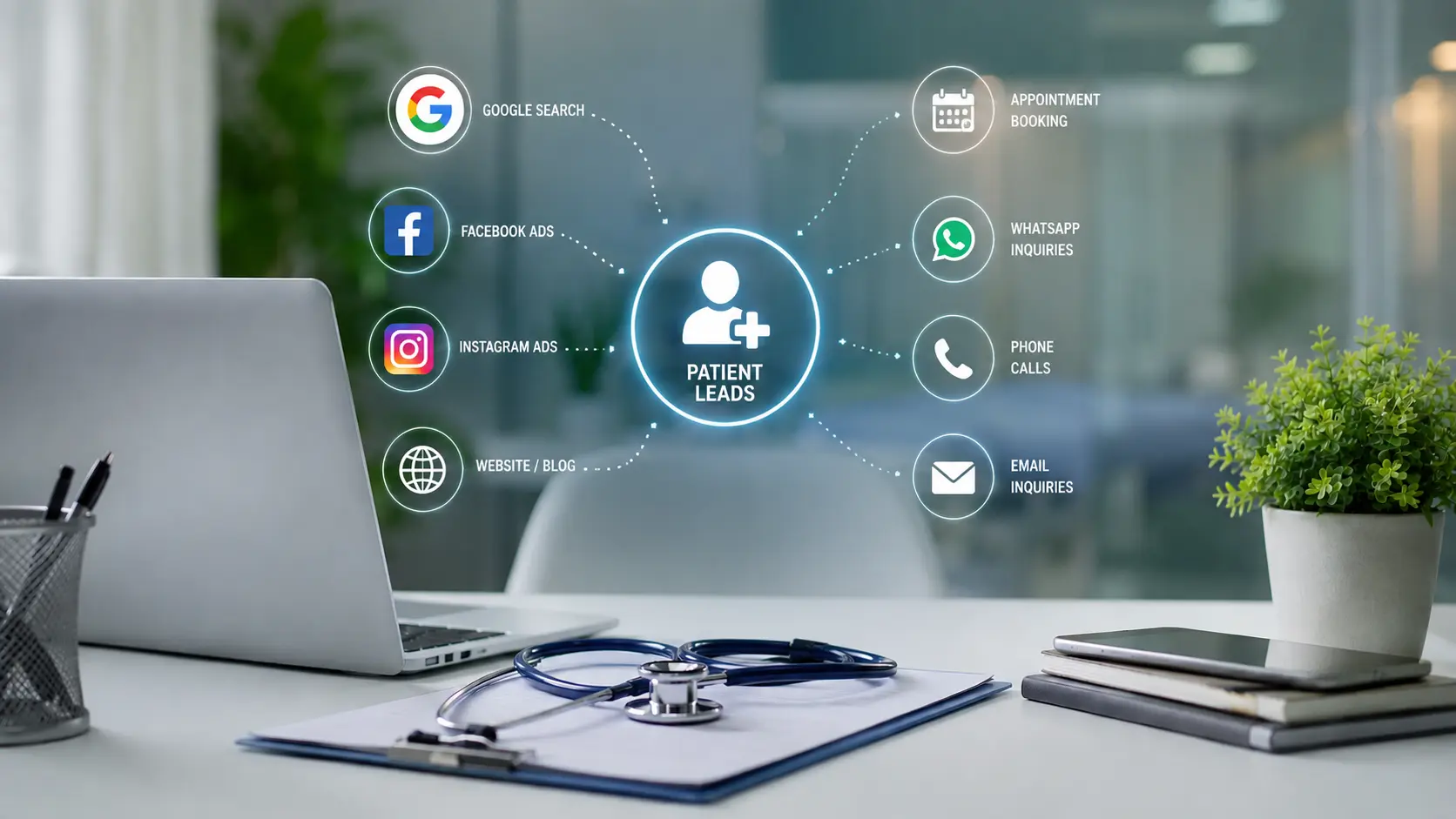
Google Search is the primary discovery channel for high-intent international patient research. Invest in SEO for procedure + India keywords and run targeted Google Ads campaigns for your highest-value procedures.
Facebook and Instagram reach Indian diaspora effectively — these are communities who know India's healthcare quality and often guide friends and family from their birth countries toward Indian hospitals. Country-specific targeting lets you reach these diaspora communities precisely.
Medical tourism marketplace platforms (Practo International, Vaidam Health, MediBid) offer referral network access. Maintaining a complete, positive-reviewed presence on these platforms generates a stream of inquiries from patients who are already past the trust barrier of 'should I consider India for treatment.'
Conclusion
India's medical tourism opportunity is real, growing, and unevenly captured. Hospitals with clinical excellence but insufficient marketing infrastructure are invisible to the international patients who would choose them if they knew they existed. Building the right digital presence — international patient pages, procedure-specific content, trust-building video testimonials, WhatsApp-first communication infrastructure, and targeted digital advertising — is the difference between capturing this market and watching it flow to competitors who market more effectively.
Eyelevel Growth Studio is a healthcare marketing agency that helps hospitals, clinics, and healthcare institutions build patient acquisition systems. If your hospital is looking to develop or expand its international patient program, schedule a consultation with our team at theeyelevelstudio.com or call +91 97890 99499.
Want to Attract More International Patients to Your Hospital?
India’s medical tourism industry is growing rapidly, but hospitals need strong digital marketing systems to reach patients globally. Explore more insights on medical tourism marketing, international patient acquisition, and strategies that help healthcare providers expand their global reach.
Tags: